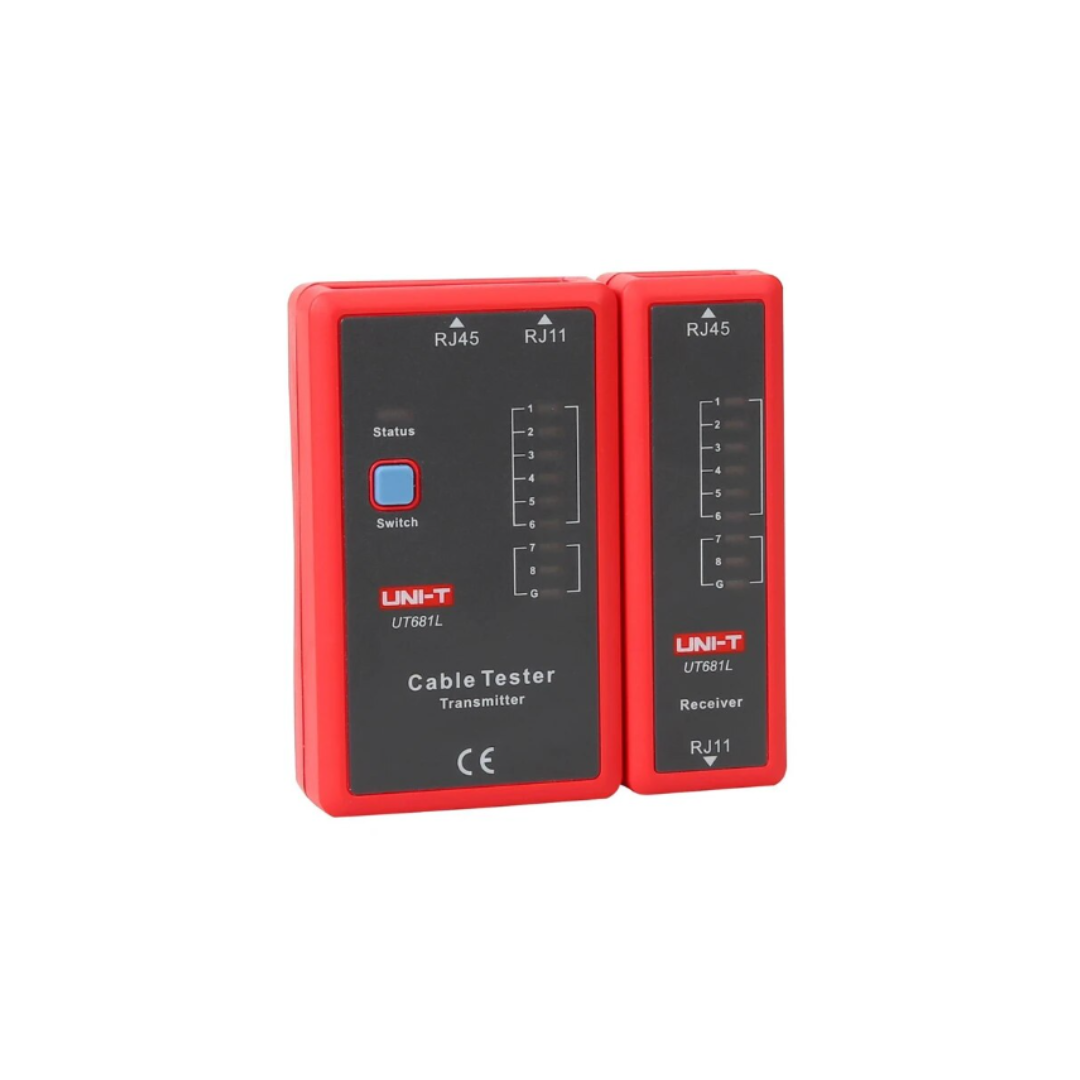
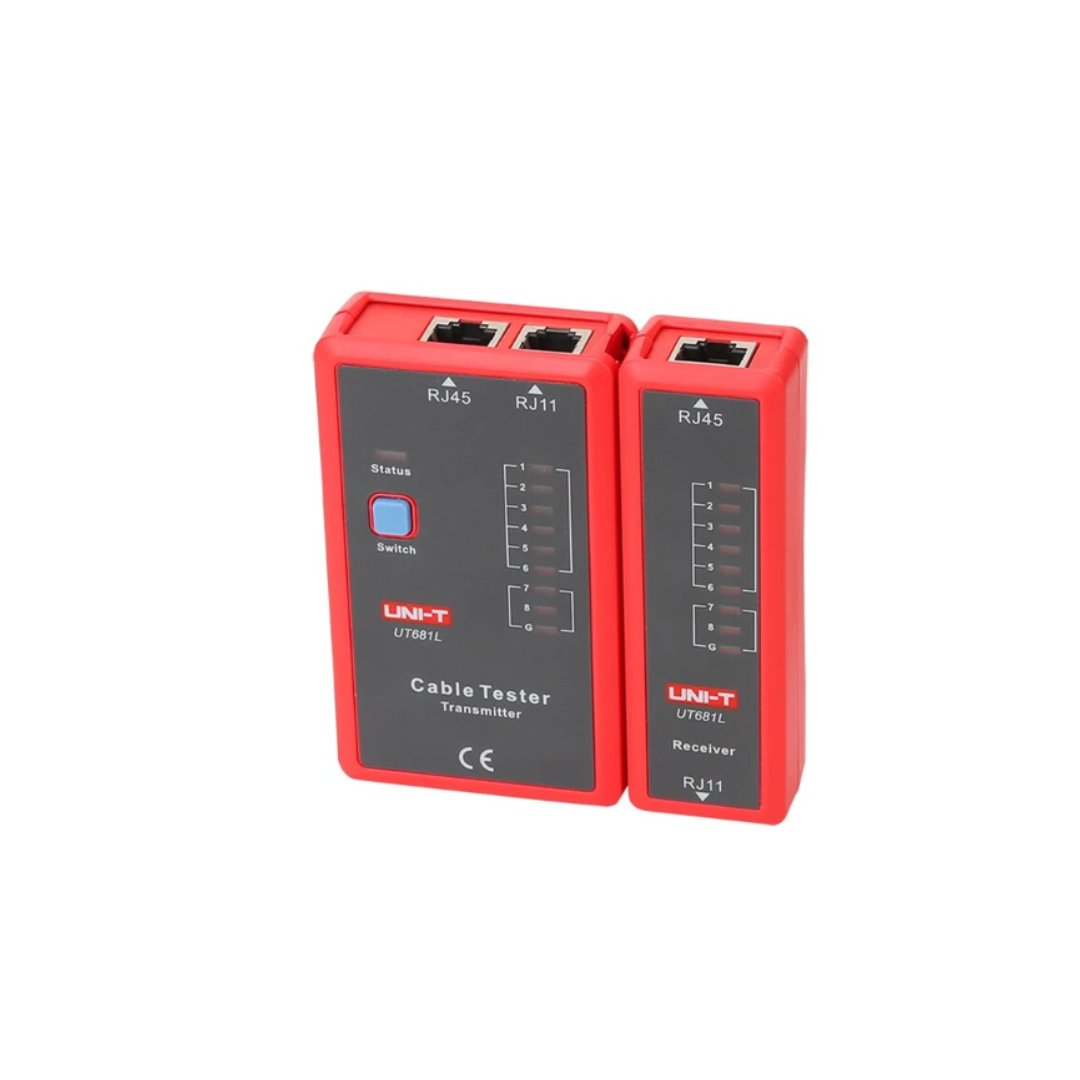
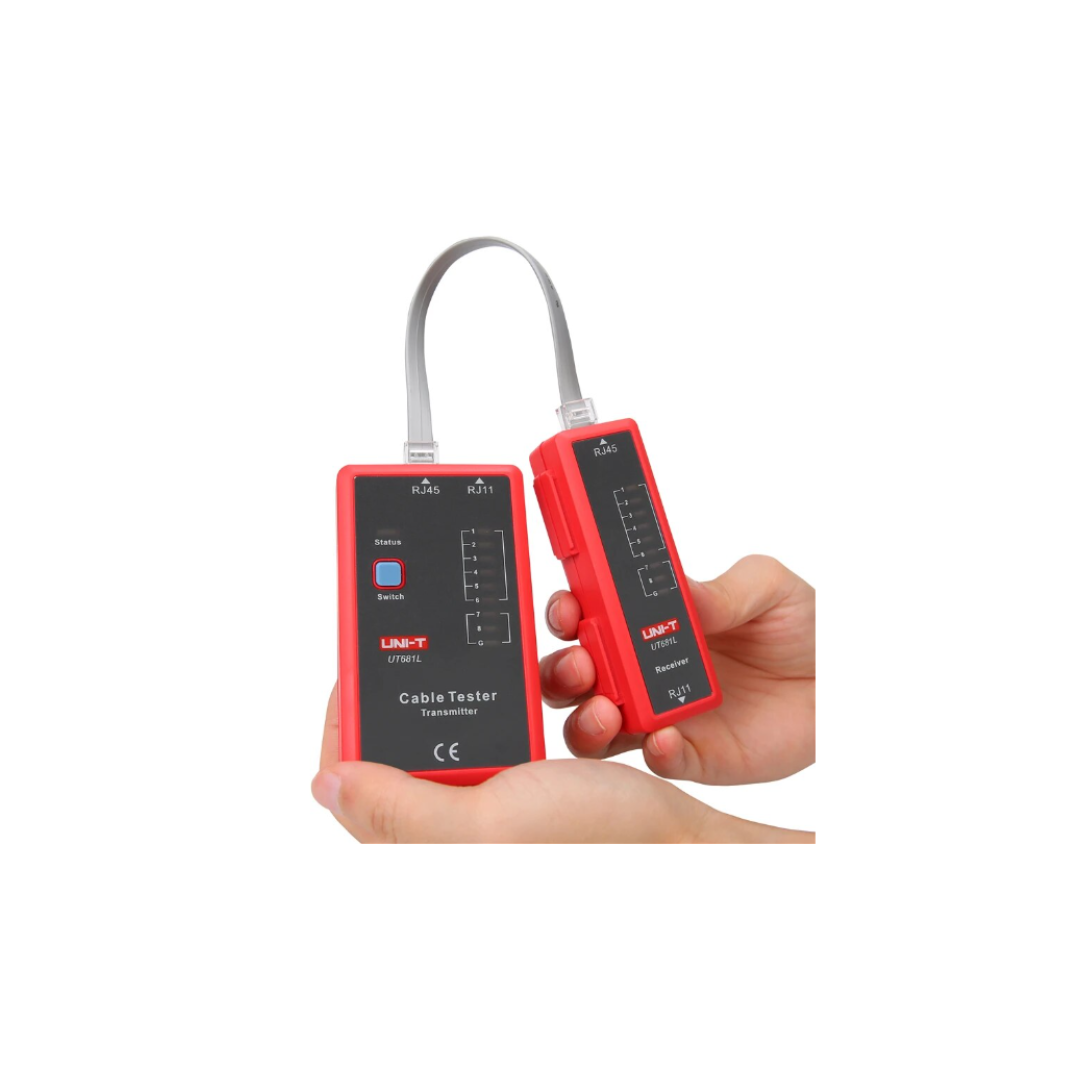
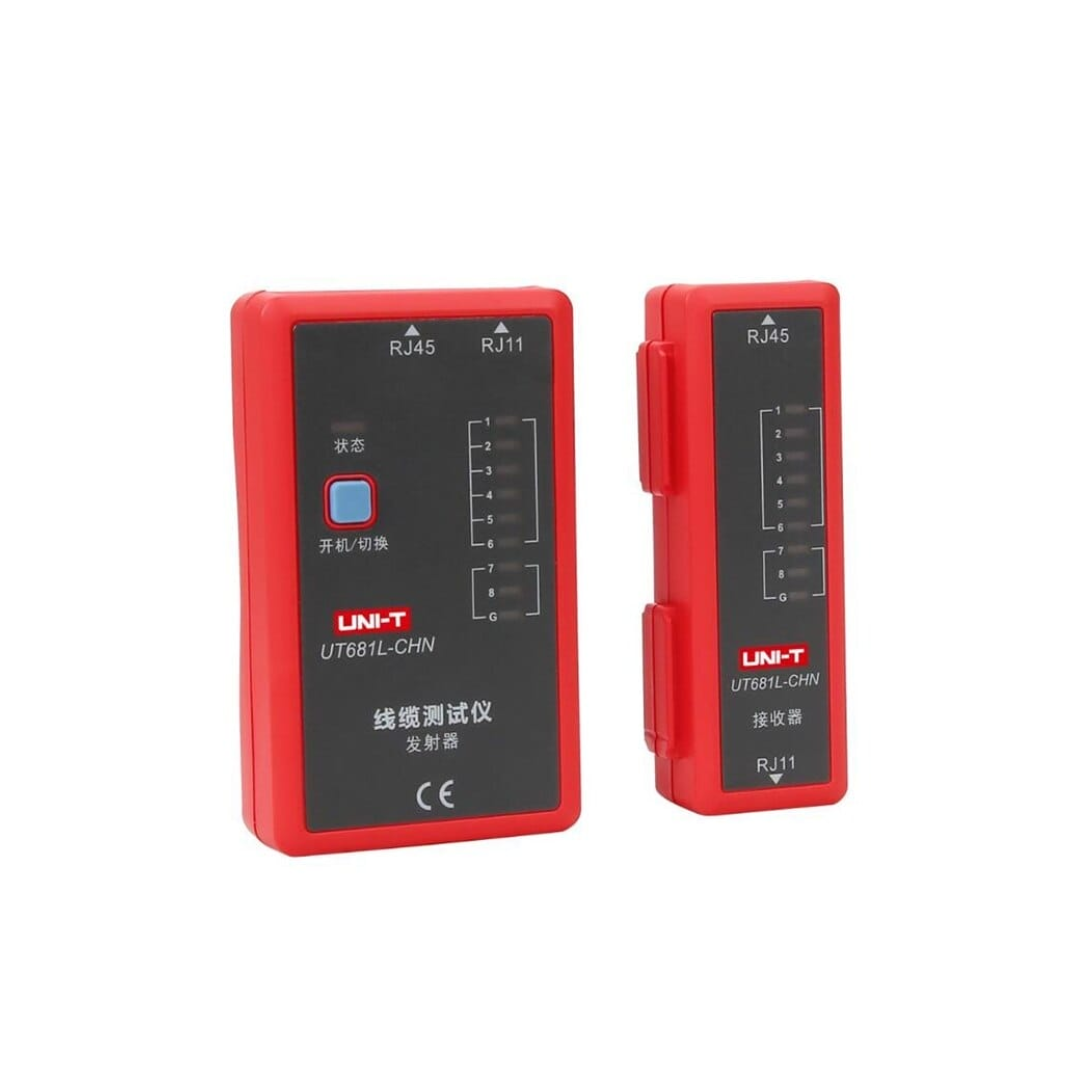
The UNI-T UT681L Cable Connection Tester is a portable and easy-to-use tool designed to quickly and efficiently check the serviceability of various low-voltage cables commonly used in homes, offices, and light-duty applications. A cable connection tester is an electronic device used to verify the integrity and correctness of connections in cables. It can be used to check continuity, identify wiring faults, and ensure that cables are properly connected. These measurements represent the physical dimensions of the device. The cable connection tester is approximately 6.75 inches in length, 3.75 inches in width, and 1 inch in height. These dimensions provide an idea of the size and portability of the tester. Here's a breakdown of its features and functionalities:
Key Features:
Compact and Portable: Its small size and lightweight design make it easy to carry and use in tight spaces.
Simple Operation: Requires minimal setup and technical knowledge.
Multi-cable Compatibility: Typically works with various cable types, including:
RJ45 (Ethernet cables)
RJ11 (Telephone cables)
BNC (Coaxial cables used for video or data transmission)
LED Indicators: Provides clear visual indication of the cable's condition:
All LEDs lit: Indicates a good connection, meaning all wires in the cable are properly connected and functioning.
Specific LED(s) unlit: Indicates an open circuit (broken wire) or miswire (incorrect connection) in the corresponding section of the cable. The specific unlit LED(s) can help identify the location of the fault.
Applications:
Troubleshooting and testing network cables: Identifying faulty or improperly terminated cables that might be causing connectivity issues in Ethernet networks.
Verifying telephone cable integrity: Checking for opens or miswires in phone lines that might lead to poor call quality or connection problems.
Ensuring proper connection of audio/video cables: Confirming correct wiring and functionality of BNC or HDMI cables used for video or audio transmission.
General cable testing: Performing basic checks on various low-voltage cables for quick troubleshooting and ensuring proper connections.
Features
Continuity Testing:
Checks for the continuity of conductors in a cable, ensuring that there is a complete path for the electrical signal.
Wiring Fault Detection:
Identifies common wiring faults such as open circuits, short circuits, or crossed wires within a cable.
Cable Type Compatibility:
Supports testing for various cable types, including Ethernet cables, coaxial cables, and others commonly used in networking and telecommunications.
Multi-Functionality:
May offer multiple testing functions, such as wire mapping, length measurement, and cable identification.
LCD Display:
Provides a clear and easy-to-read LCD display for presenting test results and relevant information.
Compact Design:
The compact dimensions (6.75 x 3.75 x 1 inches) suggest portability and ease of use in different environments.
Battery Powered:
Operates on battery power, allowing for flexibility in usage and portability.
Audible Alerts:
Audible alerts or tones may be present to indicate successful tests or to alert the user to potential issues.
Benefits
The UNI-T UT681L Cable Connection Tester is a portable and easy-to-use tool designed to quickly and efficiently check the serviceability of various low-voltage cables commonly used in homes, offices, and light-duty applications. A cable connection tester is an electronic device used to verify the integrity and correctness of connections in cables. It can be used to check continuity, identify wiring faults, and ensure that cables are properly connected. These measurements represent the physical dimensions of the device. The cable connection tester is approximately 6.75 inches in length, 3.75 inches in width, and 1 inch in height. These dimensions provide an idea of the size and portability of the tester. Here's a breakdown of its features and functionalities:
Key Features:
Compact and Portable: Its small size and lightweight design make it easy to carry and use in tight spaces.
Simple Operation: Requires minimal setup and technical knowledge.
Multi-cable Compatibility: Typically works with various cable types, including:
RJ45 (Ethernet cables)
RJ11 (Telephone cables)
BNC (Coaxial cables used for video or data transmission)
LED Indicators: Provides clear visual indication of the cable's condition:
All LEDs lit: Indicates a good connection, meaning all wires in the cable are properly connected and functioning.
Specific LED(s) unlit: Indicates an open circuit (broken wire) or miswire (incorrect connection) in the corresponding section of the cable. The specific unlit LED(s) can help identify the location of the fault.
Applications:
Troubleshooting and testing network cables: Identifying faulty or improperly terminated cables that might be causing connectivity issues in Ethernet networks.
Verifying telephone cable integrity: Checking for opens or miswires in phone lines that might lead to poor call quality or connection problems.
Ensuring proper connection of audio/video cables: Confirming correct wiring and functionality of BNC or HDMI cables used for video or audio transmission.
General cable testing: Performing basic checks on various low-voltage cables for quick troubleshooting and ensuring proper connections.
Technical Specifications
The UNI-T UT681L Cable Connection Tester is a portable and easy-to-use tool designed to quickly and efficiently check the serviceability of various low-voltage cables commonly used in homes, offices, and light-duty applications. A cable connection tester is an electronic device used to verify the integrity and correctness of connections in cables. It can be used to check continuity, identify wiring faults, and ensure that cables are properly connected. These measurements represent the physical dimensions of the device. The cable connection tester is approximately 6.75 inches in length, 3.75 inches in width, and 1 inch in height. These dimensions provide an idea of the size and portability of the tester. Here's a breakdown of its features and functionalities:
Key Features:
Compact and Portable: Its small size and lightweight design make it easy to carry and use in tight spaces.
Simple Operation: Requires minimal setup and technical knowledge.
Multi-cable Compatibility: Typically works with various cable types, including:
RJ45 (Ethernet cables)
RJ11 (Telephone cables)
BNC (Coaxial cables used for video or data transmission)
LED Indicators: Provides clear visual indication of the cable's condition:
All LEDs lit: Indicates a good connection, meaning all wires in the cable are properly connected and functioning.
Specific LED(s) unlit: Indicates an open circuit (broken wire) or miswire (incorrect connection) in the corresponding section of the cable. The specific unlit LED(s) can help identify the location of the fault.
Applications:
Troubleshooting and testing network cables: Identifying faulty or improperly terminated cables that might be causing connectivity issues in Ethernet networks.
Verifying telephone cable integrity: Checking for opens or miswires in phone lines that might lead to poor call quality or connection problems.
Ensuring proper connection of audio/video cables: Confirming correct wiring and functionality of BNC or HDMI cables used for video or audio transmission.
General cable testing: Performing basic checks on various low-voltage cables for quick troubleshooting and ensuring proper connections.